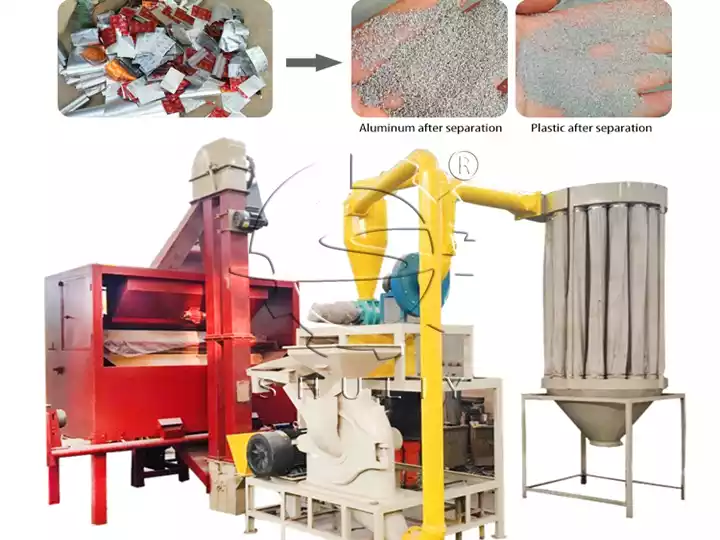
The aluminum plastic separator pharmaceutical packaging separation recycling line is designed for aluminum-plastic composite materials. It efficiently achieves the physical separation of aluminum and plastic. The core separation process employs physical crushing, grinding, and electrostatic separation, achieving a separation purity of over 99.9% without chemical agents, thereby preventing secondary environmental pollution.
To ensure plastic quality, the crushing and grinding sections are equipped with a recirculating water cooling system to prevent plastic melting or discoloration caused by prolonged operation. The entire production line utilizes PLC-based intelligent programming for automatic control and a touchscreen HMI for operation, ensuring uniform feeding and coordinated equipment performance.
Additionally, the production line is equipped with a pulse dust collection system, which effectively purifies the workspace and enhances the safety and cleanliness of the operating environment. The equipment features a compact structure, rational layout, and stable performance, with specialized noise reduction measures to provide operators with a comfortable working experience.
Working video of the aluminum plastic separator and recycling line
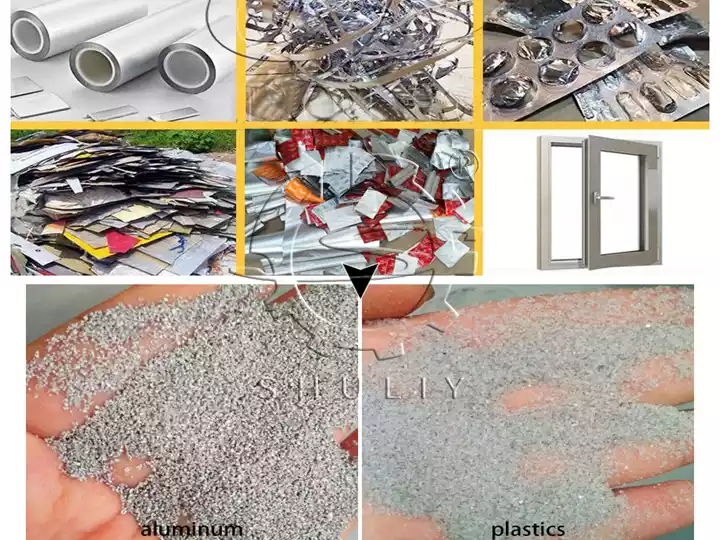
applications of aluminum plastic separator line
- Suitable for the recycling of aluminum-plastic packaging materials used in the food and pharmaceutical industries, as well as aluminum-plastic scrap from packaging manufacturers.
- Capable of processing various types of aluminum-plastic composite materials to achieve efficient separation of aluminum and plastic.
- There are virtually no restrictions on feedstock; the system is suitable for whole sheets of aluminum-plastic composite (width ≤ 180 cm, thickness ≤ 14 mm) as well as bundles with a diameter ≤ 180 cm.
- The separated aluminum powder can be sold to industries such as fireworks manufacturing and steel deoxidation, realizing its value through secondary utilization.
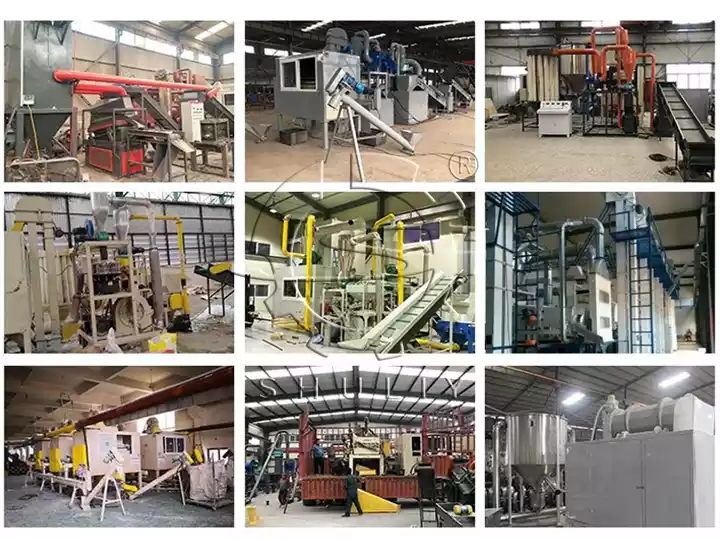
Medicine Board Recycling Line Structural Features
- Intelligent control, user-friendly operation: the entire aluminum plastic separator line utilizes a PLC-based automatic control system and a human-machine interface, requiring only 1–2 operators to manage the production process.
- Environmentally friendly and efficient: by eliminating chemical separation methods and instead employing physical crushing, grinding, and electrostatic separation, the system achieves a separation purity of over 99.9%.
- Temperature control and protection: crushing and grinding equipment is equipped with recirculating water chillers, ensuring that prolonged operation does not affect plastic quality.
- Dust removal and purification: the pulse dust collection system effectively purifies the workspace, ensuring environmental compliance and operator comfort.
- Compact structure and rational layout: equipment installation plans can be customized to fit the customer’s existing site, flexibly adapting to various workshop environments.
- Customizable production capacity: equipment models can be configured to meet specific output requirements, supporting production capacities ranging from 200 kg/h to 1,200 kg/h.
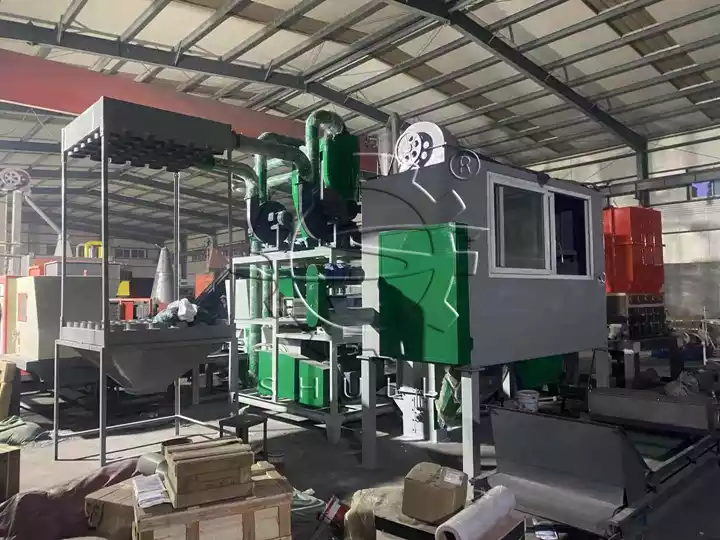
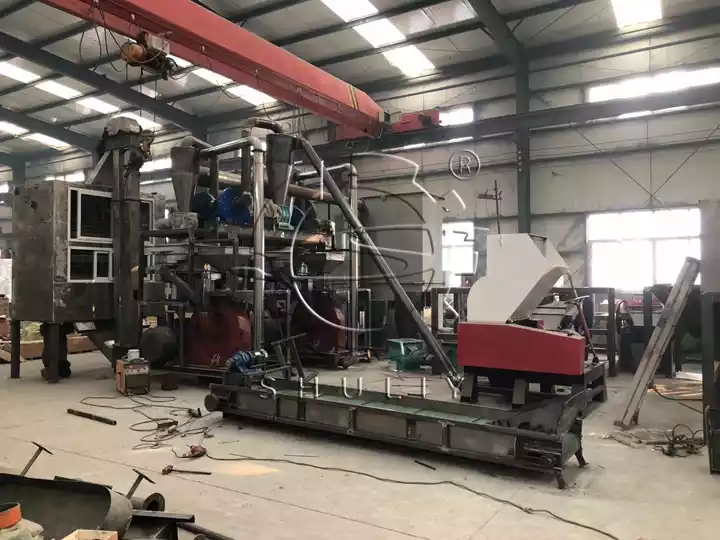
Processing Flow and Operating Principles
- Crushing stage: whole sheets of aluminum-plastic composite panels or clumps of pharmaceutical blister packs are preliminarily crushed in a crusher to reduce the material size.
- Grinding and screening stage: the crushed material is fed into a grinder for fine grinding, while a vibrating screen simultaneously sifts the material to ensure uniform particle size, thereby guaranteeing effective separation in subsequent stages.
- Lifting and conveying stage: an air-powered feeder, elevator, and cyclone discharge device transport the material to the electrostatic separation unit, ensuring a continuous and efficient process.
- Electrostatic separation stage: utilizing electrostatic principles, aluminum and plastic are efficiently separated, with aluminum powder and plastic particles collected separately.
- Finished product collection and dust removal: the separated aluminum powder and plastic particles are collected by dedicated collection devices, while pulse-jet dust collectors maintain a clean workshop environment.
This aluminum plastic separator production line employs a fully dry separation process, eliminating secondary pollution while offering high production efficiency and simple operation.
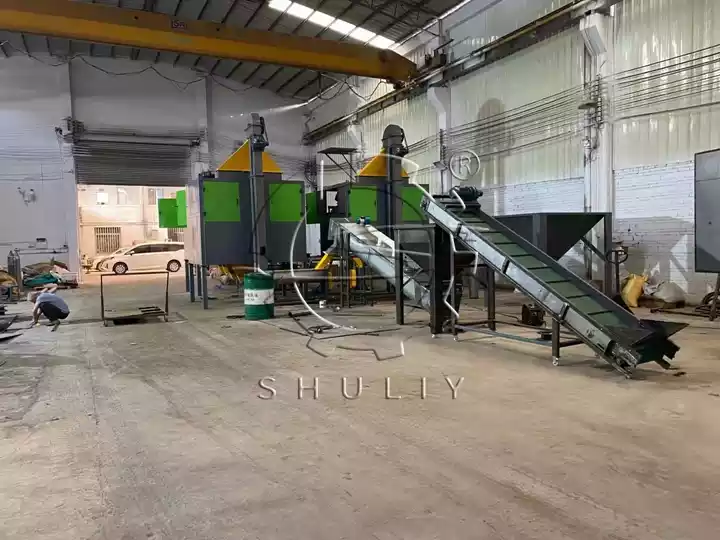
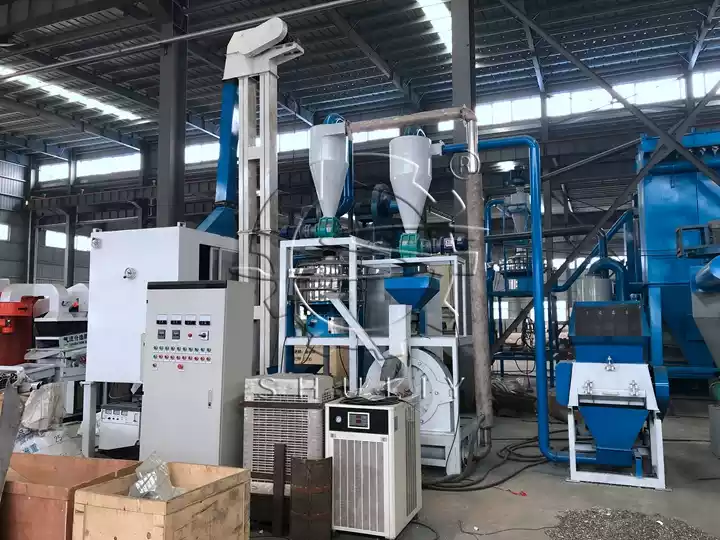
equipment technical parameters
ModelPowerSorting Purity IndexCollection CoefficientOutputDimension (L×W×H)WeightSL-30070KW≥99%≥99.5%200-300kg/h7500×6000×4200mm6500kgSL-600115KW≥99%≥99.5%500-600kg/h9500×7500×4200mm7800kgSL-800215KW≥99%≥99.5%700-800kg/h11500×8000×4200mm12800kgSL-1000287.8KW≥99%≥99.5%1000-1200kg/h16000×5000×4200mm16200kgSpecifications of the aluminum plastic separator pharmaceutical packaging separation recycling line
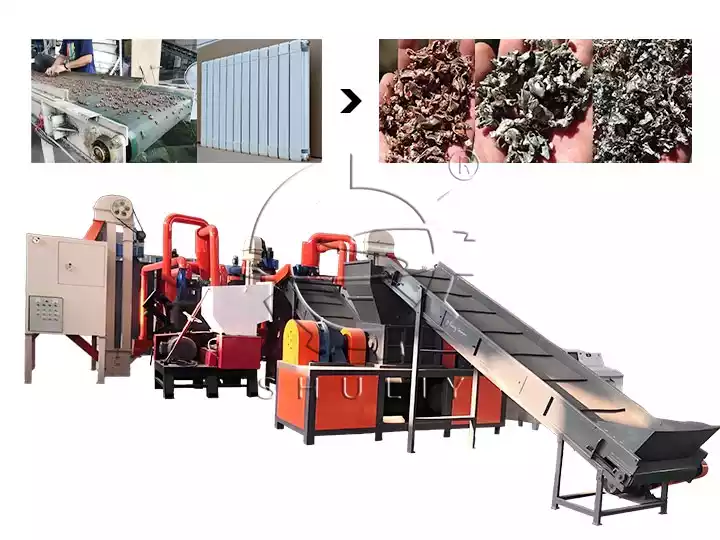
In addition, we offers a wide range of other aluminum recycling equipment, such as production lines for recycling copper-aluminum radiators and equipment for recycling aluminum profiles. We are able to meet the recycling needs of various types of aluminum and composite materials, providing customers with one-stop green recycling solutions.